Portworx Expands Container Storage Portfolio

Portworx has updated its Portworx Enterprise container storage platform to include backup and recovery software alongside a capacity management tool.
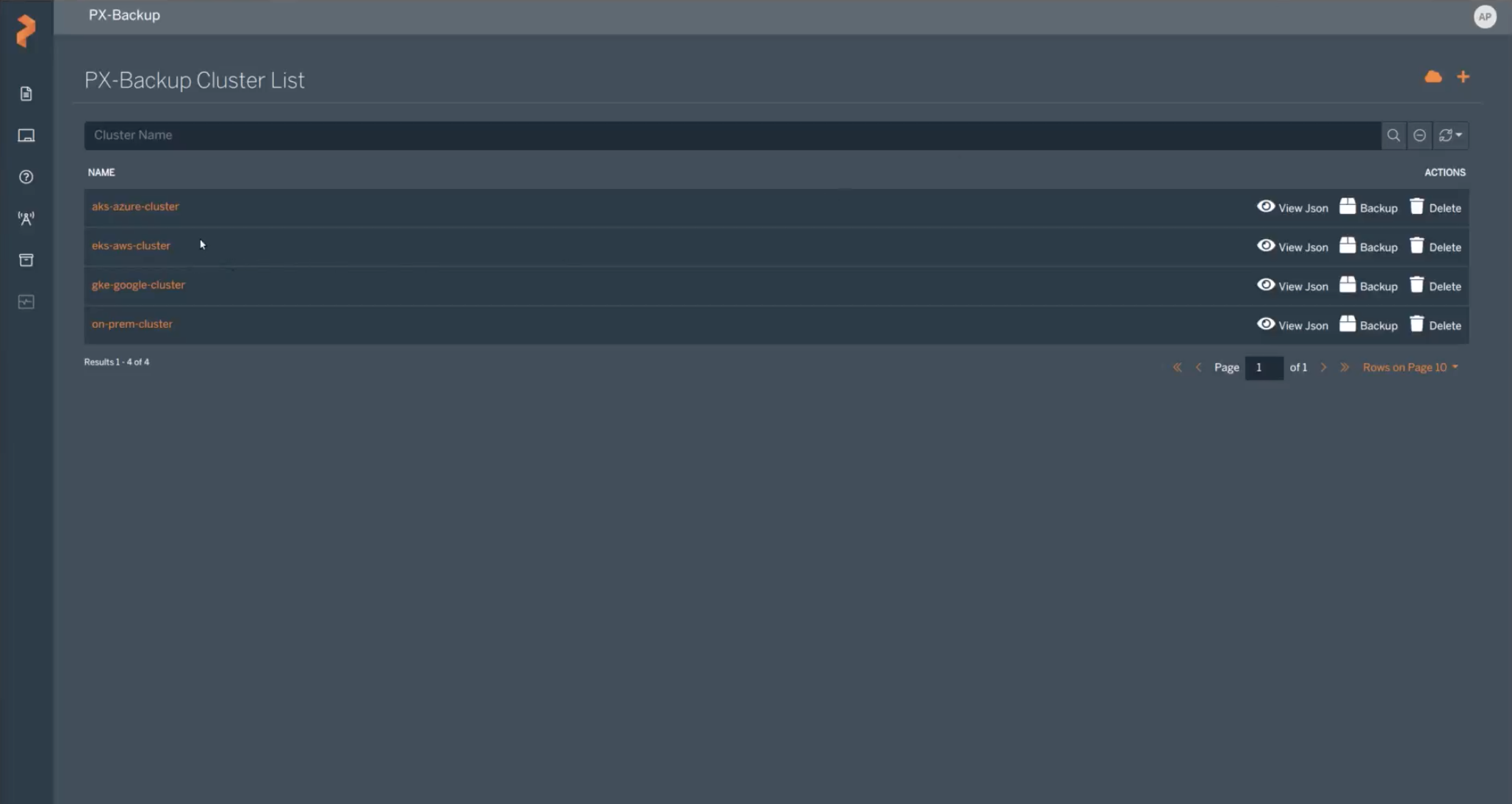
Company CTO Gou Rao says this update marks the first time Portworx has added backup and recovery software to the platform, though previously, the company offered a disaster recovery tool. The graphical backup and recovery tool, dubbed PX-Backup, is aimed at organizations that don’t need to recover an application running on a Kubernetes cluster in less than 24 hours.

The number of data protection tools that run natively on Kubernetes is expanding as the number of stateful containerized applications running in these environments increases. Rao says PX-Backup is unique in that it gives IT teams the ability to back up individual pods, groups of pods or an entire Kubernetes namespace through a single command, including multi-node distributed databases such as Cassandra, Kafka, Elasticsearch and MongoDB.
Data can be backed up to any S3-compatible object storage and then recovered by relaunching a standard Kubernetes deployment file. PX-Backup also captures metadata about backups, allowing enterprises to address compliance issues such as who initiated a backup when and for how long.
Rao also notes PX-Backup can be applied either within Portworx Enterprise or directly against public clouds such as Amazon Web Services (AWS), Microsoft Azure or Google Cloud Platform (GCP), which rely on their own tools and services for managing object storage.
At the same time, Portworx launched PX-Autopilot for Capacity Management, which enables IT organizations to reduce storage costs by provisioning storage only when it is needed. Rao says the goal is to eliminate overprovisioning of cloud storage that isn’t consumed by automatically detecting when storage is running low and provisioning additional capacity only when needed. PX-Autopilot also gives IT organizations the option to define rules for scaling storage based on an individual container volume or the entire storage pool. That capability not only can cut the amount of cloud storage space that needs to be provisioned by as much as half, but it also can eliminate as many as 20 hours of manual labor for the storage administrator.
Rao says that by providing a declarative approach to managing storage, Portworx is making it easier for IT operations teams to collaborative with DevOps teams. Rather than requiring DevOps teams to manage storage on top of all their existing application development and deployment responsibilities, Portworx is making a case for an approach to storage automation that makes IT operations teams more agile. To facilitate that transition, Portworx enables those IT teams to focus on applications rather than simply provisioning storage for each machine without knowing the requirements of the applications running on those machines.
Competition across the storage platform landscape has always been fierce. However, as more stateful containerized applications are deployed on Kubernetes, the need for storage systems that run natively on Kubernetes is increasing. The challenge many IT organizations will need to wrestle with now is determining to what degree that requirement results in the need to embrace a new storage platform vendor.