
AI-driven Kubernetes in Action: Exploring AI-Assisted Kubernetes Operations

In recent times, the way we manage containers has changed significantly with the emergence of Kubernetes as the de facto platform for managing large-scale containerized application deployments.
Artificial Intelligence (AI) is revolutionizing the way in which we manage our Kubernetes environments – specifically turning our operational experience from reactive troubleshooting to one that employs proactive, intelligent automation.

This article shows in detail how AI can be used in your Kubernetes operations.
The Need for AI in Kubernetes
As organizations adopt Kubernetes to serve their distributed-cloud-based workloads, the degree of complexity and effort required to manage Kubernetes’ resources continues to rise. From managing the environment itself to securing the workloads that run within that environment, Kubernetes can be difficult for organizations to manage without leveraging Kubernetes-AI technology.
By adopting AI-enabled Kubernetes, organizations can increase the operational efficiency of their Kubernetes clusters, ultimately revitalizing the way they deploy, operate and monitor their Kubernetes clusters. As early adopters increasingly embrace AI technology for managing their Kubernetes clusters, organizations will gain a significant advantage in performance and operational efficiency relative to organizations that do not adopt AI technologies.
In addition to enabling more intelligent operation of Kubernetes via the application of AI technology, AI can also be used in conjunction with predictive analytics based on historical data to increase the operational effectiveness of deploying Kubernetes. The use of AI in conjunction with predictive analytics can support the management and operation of Kubernetes via automation, anomaly detection, real-time insight, optimization of resource utilization and proactive maintenance.
Figure 1 below shows a high-level view of how AI-powered Kubernetes works.
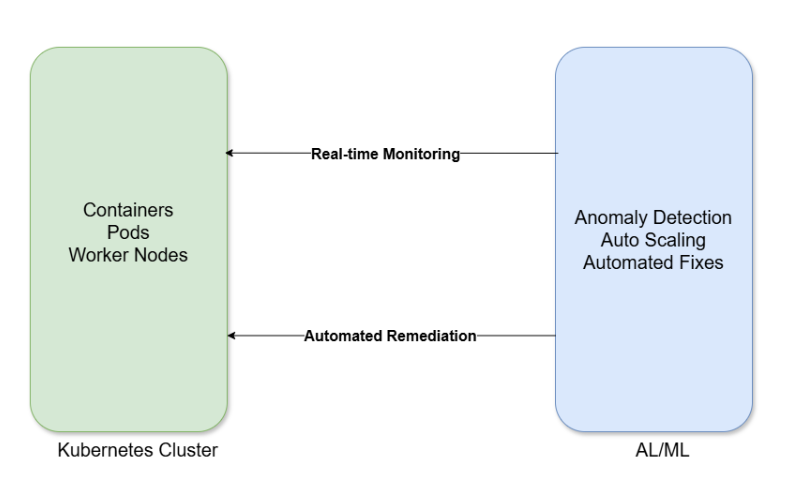
Figure 1: AI-assisted Kubernetes Operations
The use of AI in Kubernetes operations marks a sea change in the way we use Kubernetes, and provides a plethora of benefits, such as, enhanced performance and reliability, and improved operational efficiency.
Key Features
The key features of AI-powered Kubernetes Operations include:
- Support for Intelligent Troubleshooting and Diagnostics
- Improved Cost optimization
- Better Resource Management
- Proactive detection of any anomalies
- AI-enabled CI/CD pipelines
Benefits
The blend of AI and Kubernetes technologies can improve operational efficiencies significantly:
- Reduced human effort and manual operations
- Reducing the costs associated with running hardware
- Facilitating more successful deployments of Kubernetes clusters
- Improved utilization of the resources in a Kubernetes cluster
- Enhanced reliability and availability through the self-healing
Challenges and Considerations
While using AI in Kubernetes environments can be helpful in several ways, there are certain challenges as well. For example, implementing AI in a Kubernetes environment can be complex and you may have to deal with issues related to data privacy and security.
There are many factors to consider when working with AI-powered Kubernetes.
- Model Drift: The performance of ML models can change over time, thereby resulting in poor performance, which will subsequently impact the analysis and decisions made based on that same model.
- Data Quality: The quality of the data is one of the most important factors that determines the effectiveness of AI. Hence, the generated metrics, logs, and traces should be accurate.
- Operational Complexity: With AI-powered Kubernetes, you will have greater operational complexity because you would need to manage the operations of both the Kubernetes cluster and the ML models running on the cluster.
- Vendor lock-ins: An AI-powered Kubernetes platform is often tied to specific cloud providers or proprietary large language models (LLMs), thereby limiting portability and long‑term support.
- Security and compliance risks: The usage of AI and AI-powered tools and technologies often create new attack vectors due to its expanded attack surface, vulnerabilities in the supply chain, data poisoning, prompt injection, AI model exfiltration.
You should be able to handle these challenges to leverage the benefits of AI-powered Kubernetes environments.
Tools for AI-powered Kubernetes operations
The following are some of the widely used tools that facilitate AI-powered Kubernetes operations:
- Kubeflow: Kubeflow is an open-source, portable, and scalable platform that can run ML workloads across multiple Kubernetes environments. It contains a set of composable microservices and facilitates MLOps. Your AI platform teams can take advantage of Kubeflow to create a single platform for containers and virtual machines.
- K8sGPT: K8sGPT allows you to continuously scan your entire Kubernetes Cluster for errors, misconfigurations, and failed probes. It offers a plugin architecture, supports multiple AI providers and provides you the ability to run your local AI models.
- kubectl-ai: kubectl-ai is a context-aware, command-line interface (CLI) tool that will take your Natural Language queries as input and use LLMs to translate them into the corresponding kubectl commands. It requires you to confirm any execution of the proposed command(s) provided by your kubectl-AI to ensure that it works safely.
The Future
In the years to come, as AI technologies become more prevalent and the increase in usage of in container orchestration platforms such as Kubernetes increases, we’ll increasingly leverage the capabilities of AI in our Kubernetes environments.
The use of AI in Kubernetes operations revolutionizes the way we use Kubernetes, and provides several benefits, such as, improved performance and reliability, and enhanced operational efficiency. AI helps to reduce or eliminate the manual workload associated with many of the tasks involved in managing a Kubernetes deployment.
AI also allows for improved cluster performance and reliability. Through AI, it is now possible for Kubernetes clusters to be monitored continuously with advanced anomaly detection techniques, which allows for faster resolution of any issues that arise.
Takeaways
AI provides real-time data for better-informed decision-making regarding Kubernetes operations, which can result in improved performance and substantial cost reductions as far as Kubernetes deployments are concerned. Organizations can take advantage of this opportunity to enhance container orchestration management in a more efficient, effective, and autonomous way than ever before.
To be effective, i.e., to leverage this opportunity, organizations must find a healthy balance of emerging technologies, foster sound governance practices, and implement appropriate development practices to enable them to realize the operational efficiencies this blend promises.
