Carbon Relay Brings AIOps to Kubernetes

At the Open Source and Software Development (OSCON) conference this week, Carbon Relay announced a Red Sky Ops platform that leverages machine learning algorithms to optimize Kubernetes infrastructure resources.
Red Sky Ops will be available in both open source and enterprise editions. The enterprise edition includes deep reinforcement learning capabilities to continually train the artificial intelligence (AI) agent, automatic Kubernetes application configuration, data sharing and advanced automation and scheduling capabilities. The core open source version of the platform provides access to a Red Sky Ops Kubernetes load balancer, controller, API services and authentication services.

Carbon Relay CEO Matt Provo says given the inherent complexity of Kubernetes environments, most organizations eventually will need to rely on some level of AI to optimize the allocation of Kubernetes resources across multiple applications. There are a billion potential combinations of settings that IT teams theoretically are supposed to master, he notes.
Right now, organizations that have adopted Kubernetes are already overprovisioning those environments by running one application per cluster simply because of that complexity, Provo says. The trouble with that approach, he adds, is it inevitably will lead to Kubernetes cluster sprawl across the enterprise.
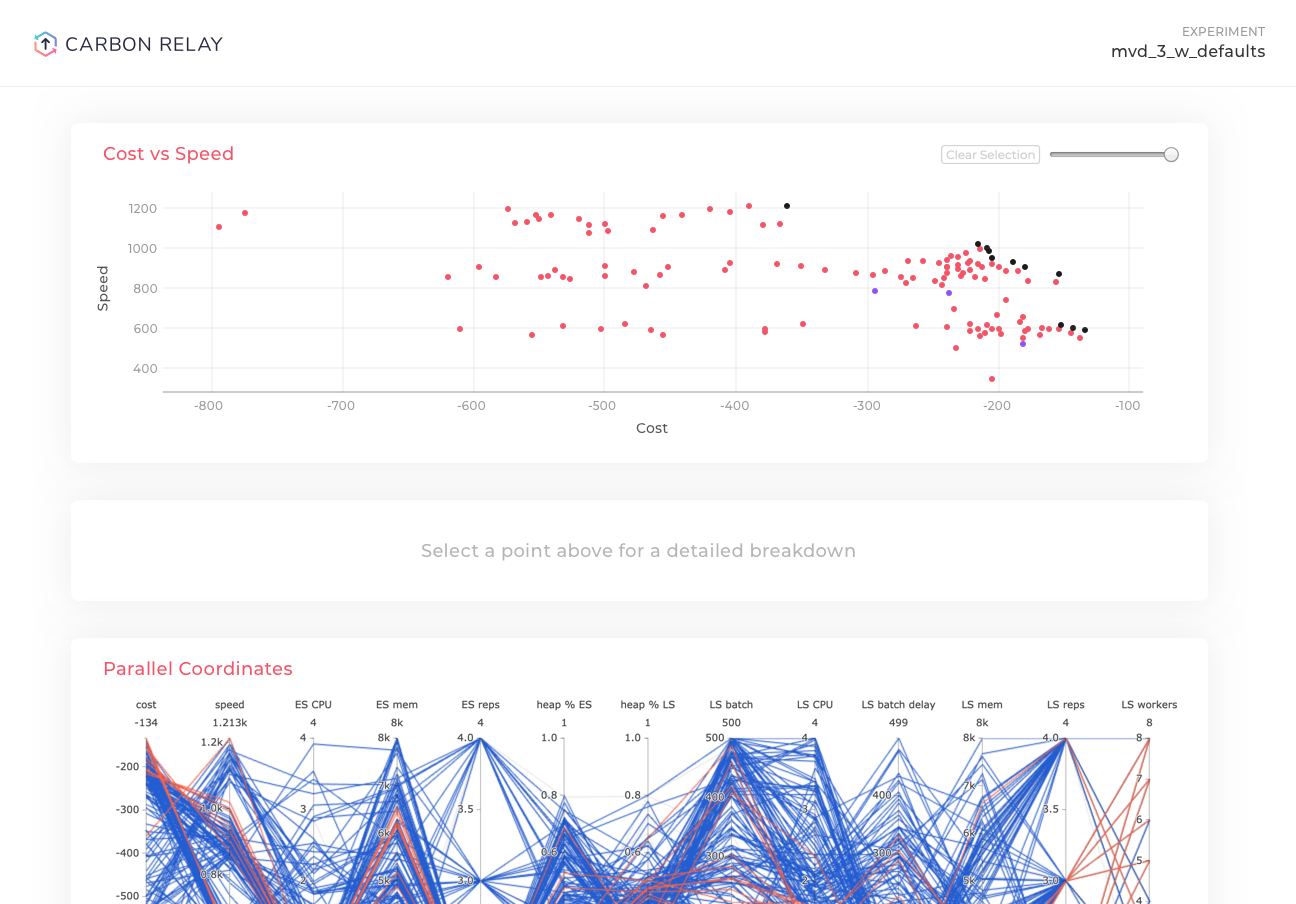
Red Sky Ops employs machine learning algorithms first to study, replicate and stress-test application environments. Once those algorithms are trained, they then determine optimal configurations, schedules and resource allocations proactively.
Additionally, Red Sky Ops works with the Kubernetes scheduler to account for service requirements, policy constraints around hardware or software use, workload-specific issues and deadlines within the recommendations it creates. Once turned on, Red Sky Ops continually recalculates parameters to maintain top performance as conditions within the Kubernetes cluster change. That approach also minimizes the alerts that any Kubernetes cluster is likely to generate as those conditions change.
Overall, Carbon Relay claims Red Sky Ops can increase operational Kubernetes performance by up to 50% while reducing operational costs associated with application management by up to 30%.
Kubernetes is one of the most powerful IT platforms ever devised, but it’s a platform developed by engineers for engineers. The average enterprise IT organization, meanwhile, still relies on IT administrators with limited programming expertise to manage IT infrastructure. The only way for those organizations to embrace Kubernetes at scale is to hire dedicated software engineers to manage infrastructure or rely more on AIOps tools such as Red Sky Ops.
It may take some time before IT operations teams gain enough confidence in the AI models created by an AIOps platform. However, as IT becomes more complex, it’s only a matter of time before just about every IT organization trying to manage highly dynamic IT environments will need some AI help.
In some instances, those AI engines might be perceived as an existential threat to the existence of the IT operations team. In practice, however, the level of application scale most organizations will be coping with will require some form of human intelligence to train and manage what one day will be a small army of digital assistants.