Profisee Brings MDM to Containers Running on Azure

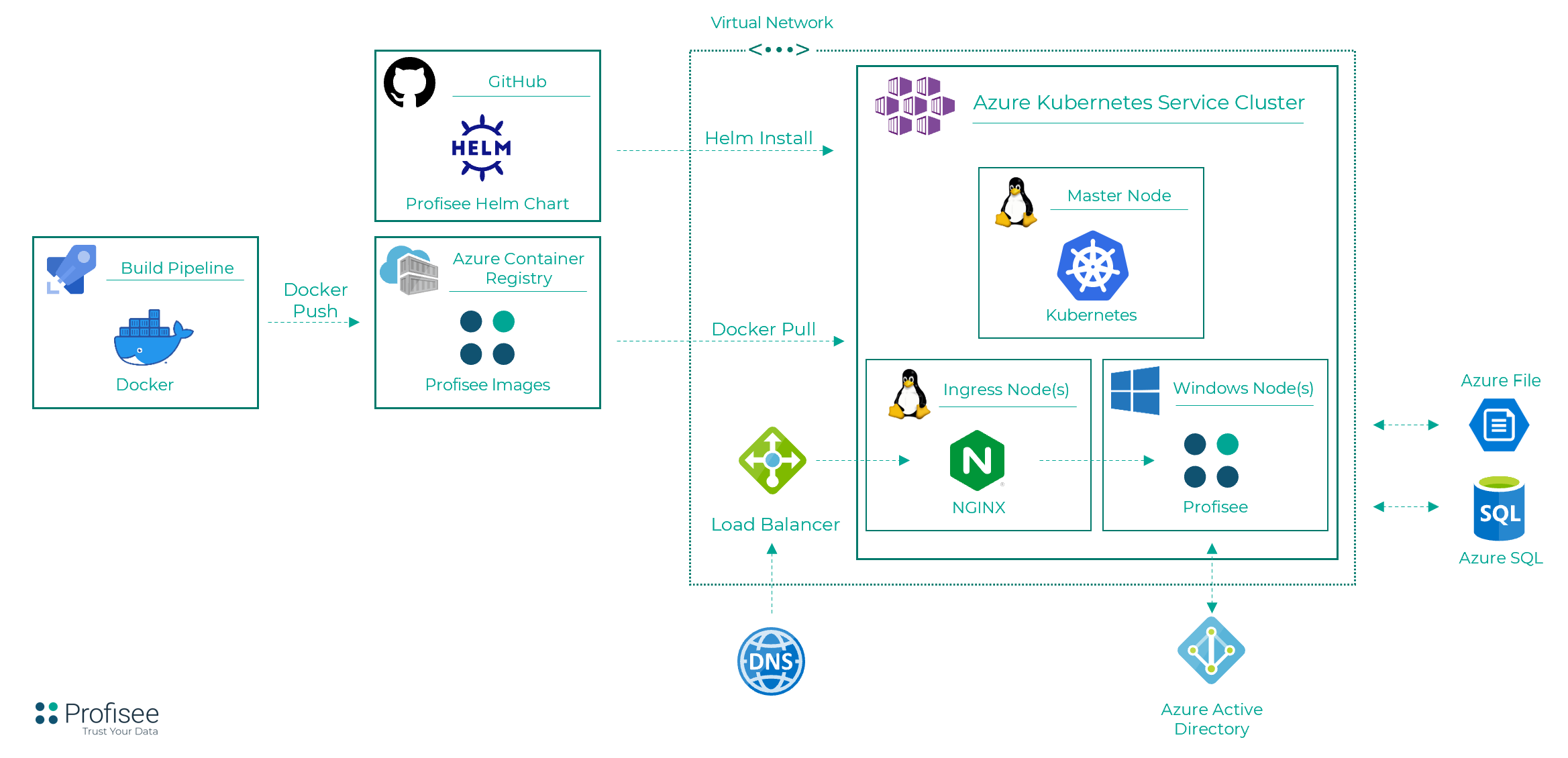
Profisee has made its namesake master data management (MDM) platform available as a set of containers that can be deployed in on-premises IT environments running Windows or on the Microsoft Azure cloud.
Company CTO Eric Melcher says the company’s MDM platform has long been optimized for Windows environments. As Microsoft has embraced containers, Profisee is now following suit by adding support for the implementation of Docker containers that Microsoft makes available for the latest edition of Windows Server and the Microsoft Azure cloud.

As the Microsoft.net framework becomes more widely employed on Linux systems, Profisee will also endeavor to make its MDM platform available on the open source operating system, Melcher says.
In the meantime, the amount of data that is aggregating on the Azure cloud is approaching critical mass. As such, the need for an MDM platform on Azure has significantly increased, he says, noting in the wake of the COVID-19 pandemic, the amount of data moving on to the Azure cloud is only going to accelerate.
Organizations of all sizes are shifting application workloads to make them more accessible and easier to manage as many employees continue to work from home to help limit the spread of the COVID-19 virus, Melcher says. The types of applications are also evolving as organizations shift toward event-driven applications to drive real-time processes, which he notes drives demand for an MDM platform capable of supporting real-time updates.
Overall, cloud computing platforms are starting to exert a significant amount of data gravity. As more workloads move into the cloud, the more both internal IT teams and independent software vendors (ISVs) want to deploy additional applications to access a pool of data that already exists on that cloud. In the case of Azure, the widespread adoption of Microsoft Office 365 has increased both the amount of data in the Azure cloud as well as the number of end users accessing that data. Applications that are deployed on top of that data pool will perform better by reducing overall latency.
Now that Microsoft has fully embraced containers, it becomes easier for application developers to build modern applications in addition to lifting and shifting legacy applications in the Azure cloud by embedding them in a container.
Most organizations, of course, are also going to have a need for data to reside in an on-premises environment. IT teams can continue to deploy Profisee in on-premises IT environments running Windows Server or take advantage of the multi-domain architecture that the technology is built on to create a hybrid cloud instance, notes Melcher.
The rate at which organizations that rely on Windows and Azure are embracing containers is not quite clear. Containers, along with orchestration engines such as Kubernetes, are still in the relatively early stages of being rolled out by Microsoft. However, Microsoft has made it clear that containers and Kubernetes are core to its hybrid cloud computing strategy. It’s now only a question of how long it will take for Microsoft to eventually fulfill that promise.