
Best Strategies for Cloud Native Cost Optimization

The rise of cloud-native technologies—containers, microservices, serverless computing and Kubernetes—has pushed companies to think more carefully about how to control the costs associated with these technologies.
As the number of organizations deploying cloud-native tools increases, so will the need to optimize cloud costs. This article discusses practical strategies organizations can use to reduce cloud usage costs.

Understanding the Problem
Cloud-native architectures provide several benefits, such as scalability, agility and innovation. However, if cloud infrastructure is not managed properly, costs can quickly spiral out of control. A few extra Kubernetes nodes, unused databases or oversized containers can add thousands of dollars to a cloud bill each month.
Many of these cost issues are not the result of cloud services being inherently expensive. More often, they result from limited visibility, ineffective governance and infrastructure outpacing business needs. Kubernetes nodes that are not in use or no longer required, abandoned databases and excessive network traffic can all drive cloud bills up significantly.
What Is Cloud Cost Optimization? Why Is It Needed?
Cloud cost optimization refers to the process of decreasing the total costs incurred from the use of cloud computing technologies while maintaining an acceptable quality of service. It means using resources according to actual needs without compromising the level of service you receive.
The main idea is to avoid wasting money while acquiring the computing resources necessary to ensure efficiency, development and security compliance. It involves creating strict governance systems and using management tools for cost savings and budgeting that can control costs, monitor cloud resource usage over time and prevent overprovisioning.
There are many advantages to using a cloud-native architecture, including the ability to quickly scale based on demand, rapidly deploy innovations and take advantage of the flexibility offered by cloud-native tools. Unfortunately, if not utilized efficiently, those benefits can translate into excessive cost growth associated with cloud-native solutions.
The Best Strategies for Optimizing Cloud Costs
In this section, we’ll examine some of the best practices organizations can follow to optimize cloud costs.
Right-Sizing Resources
One of the most common reasons organizations incur extra costs with cloud services is overprovisioning or allowing teams to use more capacity than they need. Right-sizing means adjusting resources such as CPU and storage capacity according to the actual usage of each application.
Right-sizing is the process of matching CPU, memory and instance size to a workload’s requirements. It can reduce compute costs considerably. Examining CPU, memory and network usage over time can help identify weekly batch jobs or recurring traffic spikes. Organizations can then scale down nodes and pod requests that consistently operate below their provisioned capacity.
Figure 1 illustrates the key practices that can be adopted to minimize cloud spending.
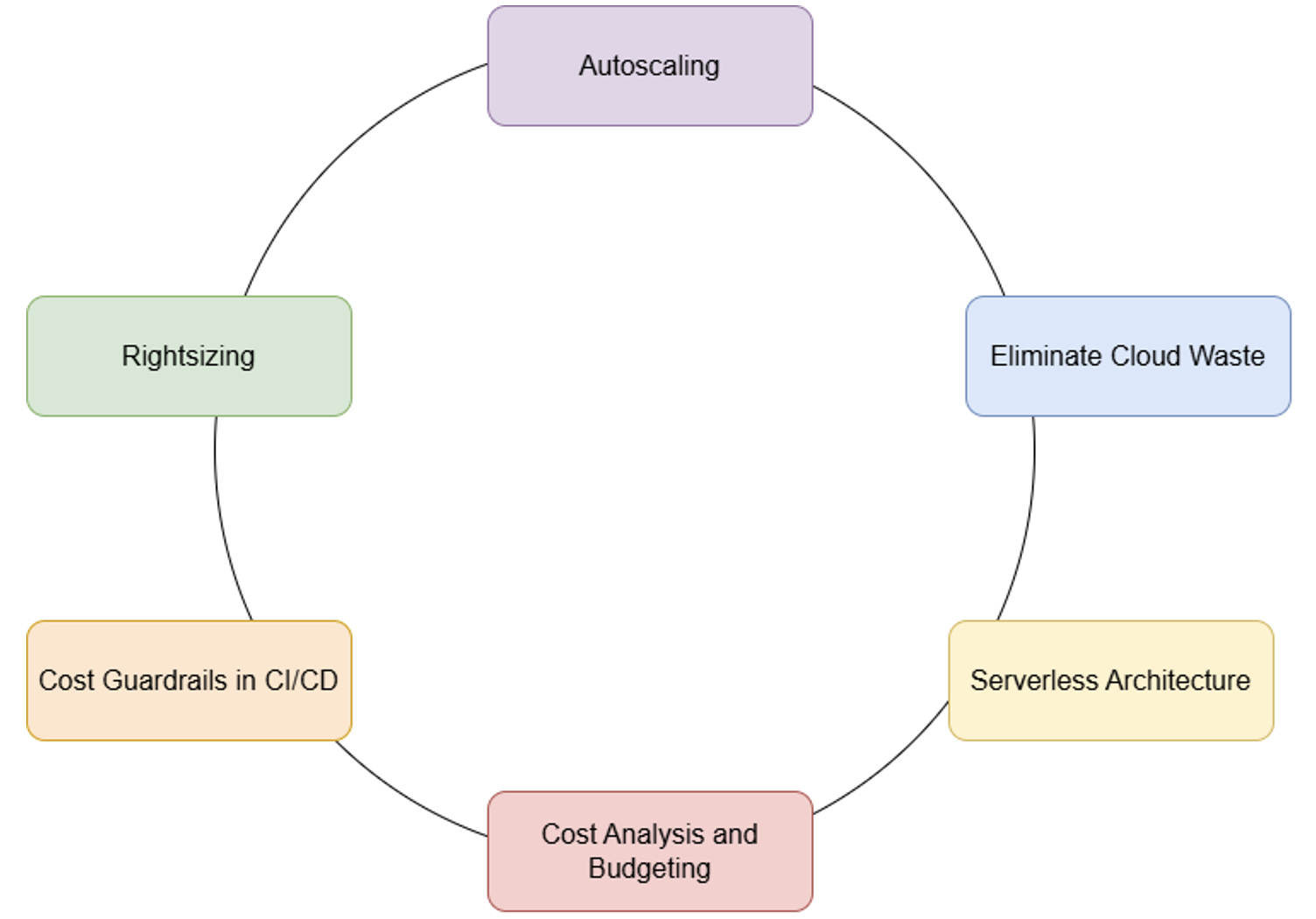
Figure 1: Demonstrating the best strategies for optimizing cloud costs
Cost Guardrails in CI/CD Pipelines
CI/CD processes should have cost-control measures built in so that resources are not wasted or remain deployed when they are no longer needed.
Key cost-control measures for CI/CD include:
- Infrastructure cost estimates on pull requests
- Policy-as-code rules that deny oversized instances and/or SKUs on provisioned resources
- Mandatory tags and owners on provisioned resources
- Budget thresholds to detect the manual creation of resources outside the budget
- Automatic removal of expired temporary infrastructure
- Deployment annotations on releases that connect cost changes to releases
Cost Analysis
Organizations should perform cost analysis and monitor resources to understand where their spending is going and which services or resources are particularly costly. By monitoring cloud costs, organizations can:
- Determine cost anomalies and prevent unexpected budget overruns
- Enable proactive cost management of cloud resources
- Identify cloud resources that are underutilized
- Predict future cloud spending based on cost trends
Use Serverless Architecture
Organizations can also implement serverless architecture to reduce cloud spending considerably. Serverless architecture is a cloud computing model in which the service provider maintains the servers, scales resources and provisions the infrastructure. It enables organizations to deploy individual code components that run in stateless containers and are initiated by particular events.
Serverless architecture lowers cloud costs by charging only for the resources consumed when code is invoked. By adopting serverless architecture, organizations can reduce operational costs, optimize spending and reduce time to market.
Implement Autoscaling
Autoscaling is a process used to manage resource capacity based on load demand rather than overprovisioning for peak traffic. Organizations should implement appropriate scaling policies based on their workload patterns.
In development and staging environments, consider using aggressive scale-down practices. In production environments, it is advisable to use metrics that reflect application workloads, such as request latency, queue depth and custom metrics, for scaling rather than relying only on CPU usage.
Design Services for Efficiency
Organizations should design their services for greater efficiency by following practices such as:
- Use cloud-native architecture, asynchronous messaging patterns and connection pooling, serialize data and cache frequently accessed data
- Where independent deployment provides negligible value, consolidate unused services
- Prefer modular monolith architecture over microservices architecture for easier refactoring and maintenance and reduced operational complexity
- While serverless architecture can be useful, do not make serverless the default service for every need; it should be used for intermittent, event-driven workloads only
Challenges of Cloud Cost Optimization
The following are some of the major challenges organizations encounter when attempting to manage cloud expenditures:
- Monitoring Cloud Expenses: As organizations become increasingly dependent on the cloud, it becomes more difficult to effectively monitor their cloud expenditures.
- Cloud Resource Overspending: Engineers can provision more resources than they need. The additional costs can become a major source of waste and add up quickly.
- Unanticipated Expenses: When there are no oversight mechanisms in place to control and govern cloud expenditures, open access to creating cloud resources can lead to unanticipated or unexplained cost anomalies.
- Oversight of Cost Management: Accurately measuring costs and understanding both costs and usage over time becomes extremely difficult without a centralized view of expenditures.
- Cost Planning and Forecasting: Organizations attempting to reduce operating costs should accurately estimate their cloud resource needs and make reliable cost projections.
Conclusion
Cloud-native cost optimization is an ongoing set of practices for aligning infrastructure spending with the value delivered to customers, application demand, reliability requirements and delivery velocity.
Cloud cost optimization should be a continuous process rather than an occasional task. Organizations that carefully consider how to allocate and utilize their resources can take advantage of cloud-native technologies while minimizing unnecessary costs.
A cloud-native platform can provide greater control over containers, pods, nodes and databases, as well as storage and network access points. Organizations can use this visibility to measure, optimize and automate their cloud resources.
