Komodor Extends AI SRE Reach for Kubernetes to AI Agents

Komodor this week added the ability to deploy agentic artificial intelligence (AI) workflows using its platform for site reliability engineers (SREs) that manage Kubernetes clusters.
Company CTO Itiel Shwartz said the Komodor Agentic Operations Platform makes it possible to deploy AI agents using the same workflows that SREs use to deploy other classes of workloads.

Based on the same core AI SRE platform that Komodor provides, the Komodor Agentic Operations Platform enables SREs to deploy custom AI agents or ones they have imported into the platform. That approach enables SREs to deploy AI agents using a familiar set of DevOps workflows, said Shwartz.
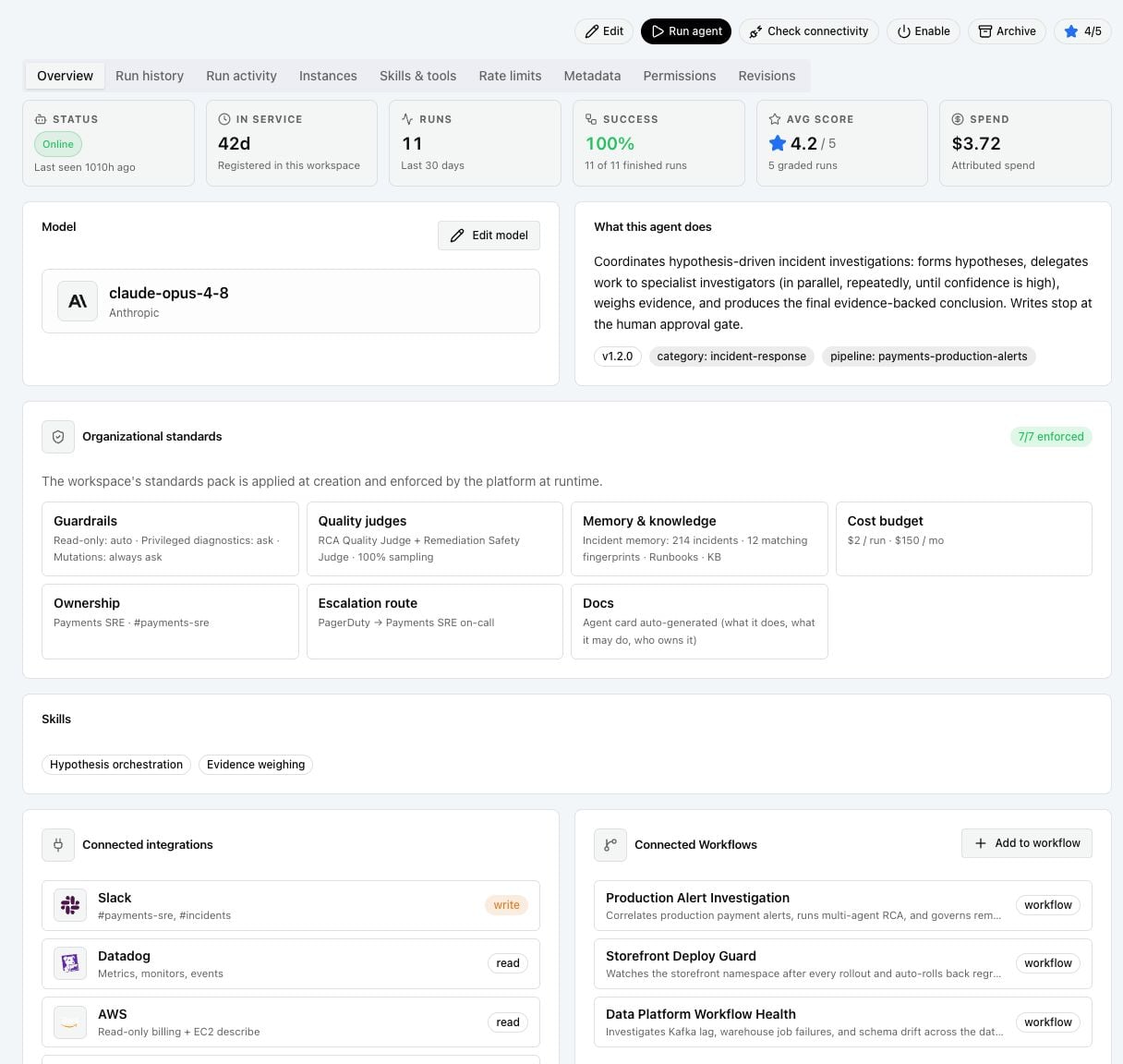
Those workflows include a set of templates to troubleshoot issues, optimize consumption of AI and remediate continuous integration/continuous delivery (CI/CD) pipelines. Additionally, Komodor provides more than 50 out-of-the-box specialist agents, skills, integrations and Model Context Protocol (MCP) servers that DevOps teams can customize to add or remove steps, adjust routing or add their own agents. DevOps teams can also shadow-test new versions of AI agents, compare their performance and route tasks to the appropriate model before promoting changes.
Finally, DevOps teams can turn an existing skill, script or runbook into a governed agent, import agents created with third-party frameworks or build new ones using a software development kit (SDK) provided by Komodor. Role-based policies define who can invoke an agent and which credentials and tools it can use, while guardrails enforce boundaries on agent behavior by checking inputs, tool calls and model responses to ensure humans approve any action an agent performs. DevOps teams can also enforce spending limits and are provided a full audit trail to provide visibility in the actions performed.
Kubernetes has rapidly become a de facto standard for deploying AI workloads. The challenge now is extending the DevOps workflows used to deploy AI workloads to what might soon be thousands of AI agents running in production environments. That creates a massive new change management challenge for DevOps teams at a time when the role of SREs in the AI era continues to evolve, noted Shwartz. Rather than being practitioners, SREs are, in effect, now becoming managers of agentic engineering workflows, he added.
In that scenario, SREs will find themselves relying on one AI agent to orchestrate the activities of hundreds of AI agents that have been trained to automate specific tasks, said Shwartz.
Mitch Ashley, vice president and practice lead for software lifecycle engineering at the Futurum Group, said the limits of agentic operations are defined today by what teams can observe, control, and prove once agents act on production clusters. Reusing the pipelines, approvals, and audit trails SREs already trust puts the governance where the muscle memory already is, he added.
The open question is whether this becomes the governing control plane for all operations or one more to reconcile, noted Ashley.
Naturally, the pace at which DevOps teams will be building and deploying AI agents will vary from one organization to another. However, at this juncture it’s not so much a question of whether they will be used but rather how soon and to what degree.
Frequently Asked Questions
What is the Komodor Agentic Operations Platform?
It is a platform for deploying, managing and governing AI agents using workflows familiar to SRE and DevOps teams.
What types of AI agents can teams deploy?
Teams can use Komodor’s prebuilt specialist agents, import agents created with third-party frameworks or build custom agents with Komodor’s SDK.
How does Komodor govern AI agents?
The platform uses role-based policies, guardrails, human approval controls, spending limits and audit trails to control how agents operate.