Coder Embraces Microsoft Dev Containers for Application Development

Coder today made generally available an update to its Cloud Development Environment (CDE) that supports Microsoft Dev Container specification to enable developers to write, run and test code using any device.
In addition, Coder has added a Template Registry to make it easier to reuse configurations along with integration with the JFrog Artifactory continuous integration/continuous delivery (CI/CD) platform and associated Xray tools for scanning binaries for security vulnerabilities and licensing compliance issues.
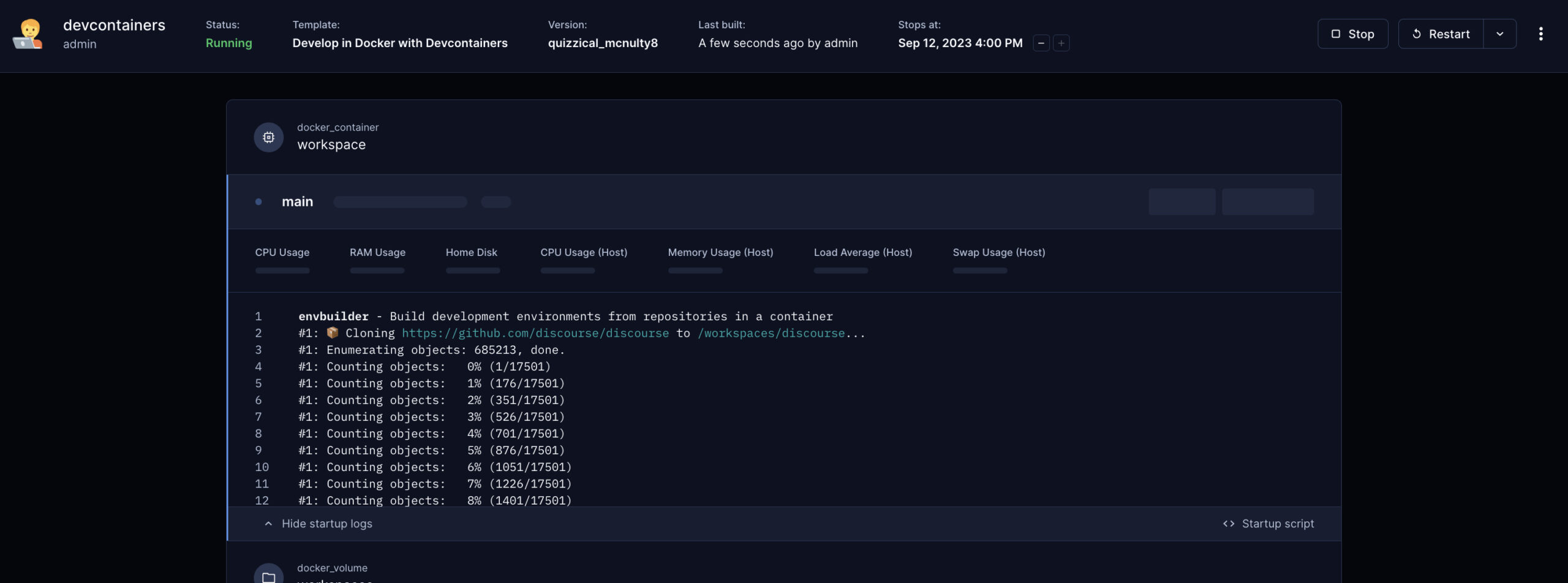
Coder, via the 2.0 release of CDE, has incorporated Envbuilder for Dev Containers, an open source project it launched based on the Microsoft Dev Containers specification. Microsoft uses that specification within its VS Code development tool to enable developers to package a local development tool stack into a Docker container that can run anywhere.
It’s not clear how many developers are shifting from building applications on a local machine to using a cloud-based service. As the security of software supply chains becomes a bigger concern, IT organizations are less comfortable with running source code on a local machine because of the risk that it might be targeted by cybercriminals.
Coder CEO Rob Whiteley also noted that a cloud-based approach to development makes it simpler for distributed teams of developers to collaborate.
The challenge is making sure that the cloud development environment not only streamlines workflows but can also be accessed within minutes without requiring cloud-native app developers to provision a Kubernetes cluster, he added. That’s critical, because if the developer experience becomes cumbersome, they are likely to vote with their feet to go work for another organization, noted Whiteley.
Coder makes its offering available as both open source software that IT teams can set up themselves and as a service through which an integrated development environment (IDE) can be accessed via a browser. There is also an enterprise edition that provides additional security, governance and observability features.
The overall goal is to provide a higher level of abstraction through which developers can quickly spin up, replicate and spin down workspaces that are managed as code, said Whiteley.
DevOps teams, of course, have a vested interest in streamlining the management of the software development life cycle, which is giving rise to platform engineering as a methodology for centralizing the management of DevOps workflows. Theoretically, platform engineering should improve the overall developer experience. As part of that effort, Coder is making a case for a cloud-based development environment that makes managing the application development process simpler, added Whiteley.
As application development becomes more challenging in the cloud-native era, a different approach to developer team management will be required. The goal is to simplify and streamline the development process so that developers aren’t writing code locally and intermittently uploading it into a cloud environment. The challenge and the opportunity is finding a way to achieve that goal so that developers will embrace it.