Mirantis Adds Service to Facilitate Migrations Off VMware Platforms

TL;DR — Key Takeaways
- Mirantis has introduced a migration service that provides IT teams with expert assistance moving VMware workloads to its Mirantis OpenStack for Kubernetes (MOSK) platform.
- The service includes a free assessment and aims to migrate workloads without requiring additional infrastructure, with migrations taking approximately five weeks on average.
- Changes to VMware licensing under Broadcom are prompting some organizations to evaluate alternative platforms, although many IT teams lack the expertise needed to manage Kubernetes environments at scale.
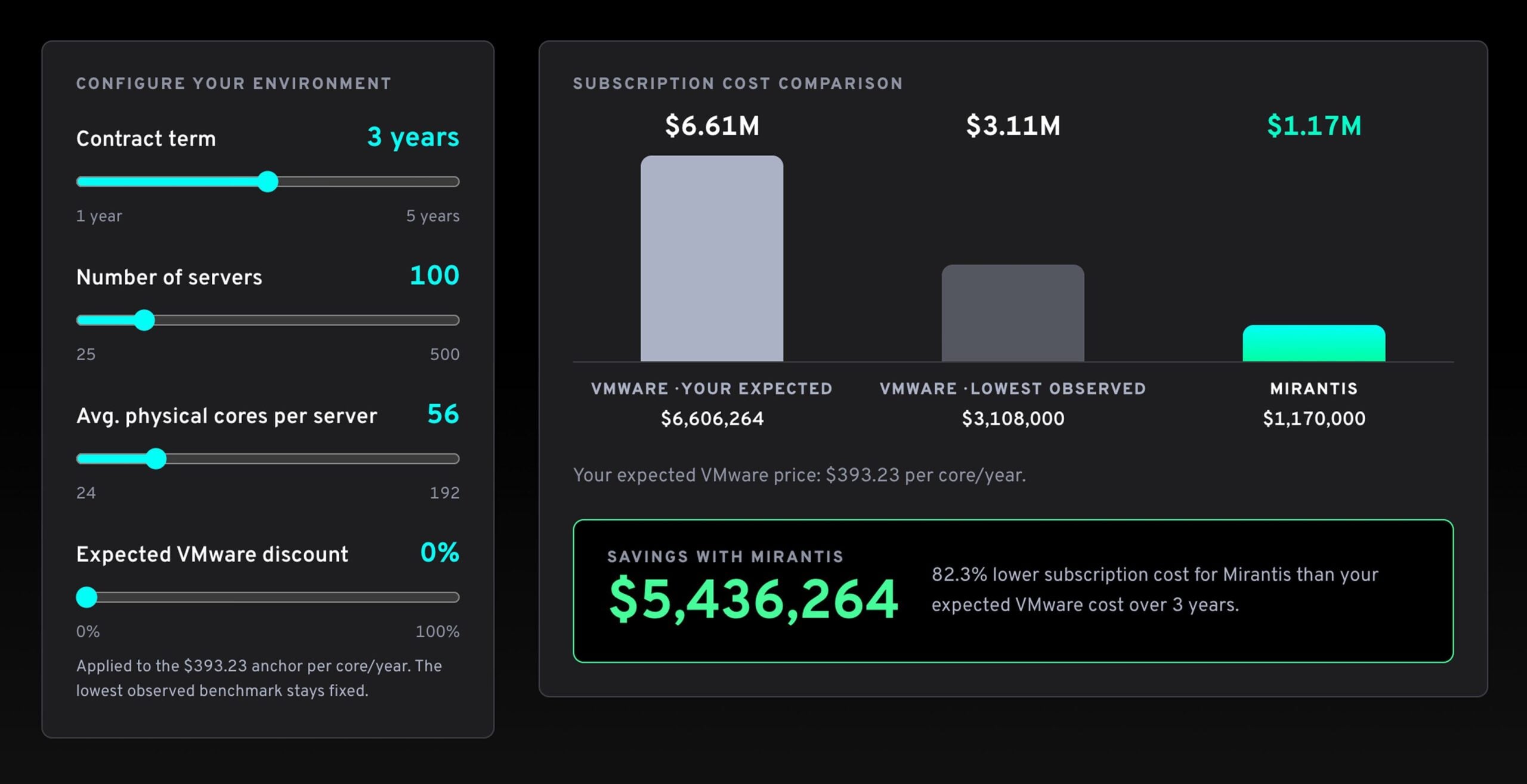
Mirantis this week added a service through which it will migrate workloads running on instances of VMware to Kubernetes clusters that run on top of the OpenStack cloud computing framework.
Cristian Klein, a Mirantis product manager, said that while Mirantis has previously made tools available to enable such migrations, the service makes Mirantis IT teams available to manage migrations to the Mirantis OpenStack for Kubernetes (MOSK) platform.

Additionally, Mirantis has hardened open source software that provides a capability similar to the VMware Virtual Disk Development Kit (VDDK) that Broadcom no longer makes available. Previously, rival vendors were relying on VDDK to facilitate migrations off the VMware platform.
It’s not clear how many organizations are opting to move workloads off VMware platforms. Broadcom has been making a case for migrating to a VMware Cloud Foundation (VCF) 9 platform that integrates hypervisors and virtual storage and networking services more tightly to provide IT teams with more value in return for higher licensing fees. Some organizations, however, are opting to move workloads running on VMware entirely to new platforms, or limit the number of additional workloads they might run in a VCF 9 environment by, for example, deploying greenfield applications on a different platform.
Regardless of approach, the challenge is that many IT teams lack the expertise needed to, if they so choose, migrate a workload from an older instance of VCF to an open source platform, noted Klein. Mirantis is looking to plug that gap by providing that expertise as part of a services engagement that includes a free assessment, he added.
The overall goal is to, whenever possible, make it possible to migrate a workload to MOSK without having to acquire additional infrastructure, noted Klein. Depending on the amount of data involved, that migration on average can be accomplished in about five weeks, he added.
Each organization will need to determine to what degree they will continue to run legacy workloads that are largely monolithic on top of a virtual machine versus rewriting them to be truly cloud-native. Most organizations, however, continue to deploy applications on top of some type of hypervisor to ensure isolation of those workloads, noted Klein.
Ultimately, more IT teams will be deploying Kubernetes clusters because of the changes that Broadcom has made to its licensing terms. The issue, of course, is that most IT administrators with VMware expertise have yet to acquire the skills needed to deploy and manage Kubernetes clusters at scale. However, with the rise of artificial intelligence (AI) the level of engineering expertise required to deploy Kubernetes clusters continues to decline.
One way or another, IT environments are becoming more diverse than ever as more Kubernetes clusters are deployed to run everything from legacy workloads to new classes of AI workloads. The challenge is that while the IT environment itself is becoming more complex, it doesn’t necessarily follow that IT teams themselves are getting any larger, even as the number of platforms that need to be managed continues to expand.