Upbound Donates Provider Code to Crossplane Project

Upbound has contributed the providers it built to integrate the open source Crossplane software with cloud platforms to the core project as part of an effort to ensure greater implementation consistency.
Crossplane is an extension of the Kubernetes control plane that uses composite resource definitions (XRDs) and Kubernetes custom resource definitions (CRDs) to extend the reach of that control plane to legacy platforms. That capability makes it possible to centrally manage control planes across multiple clouds and on-premises IT environments.

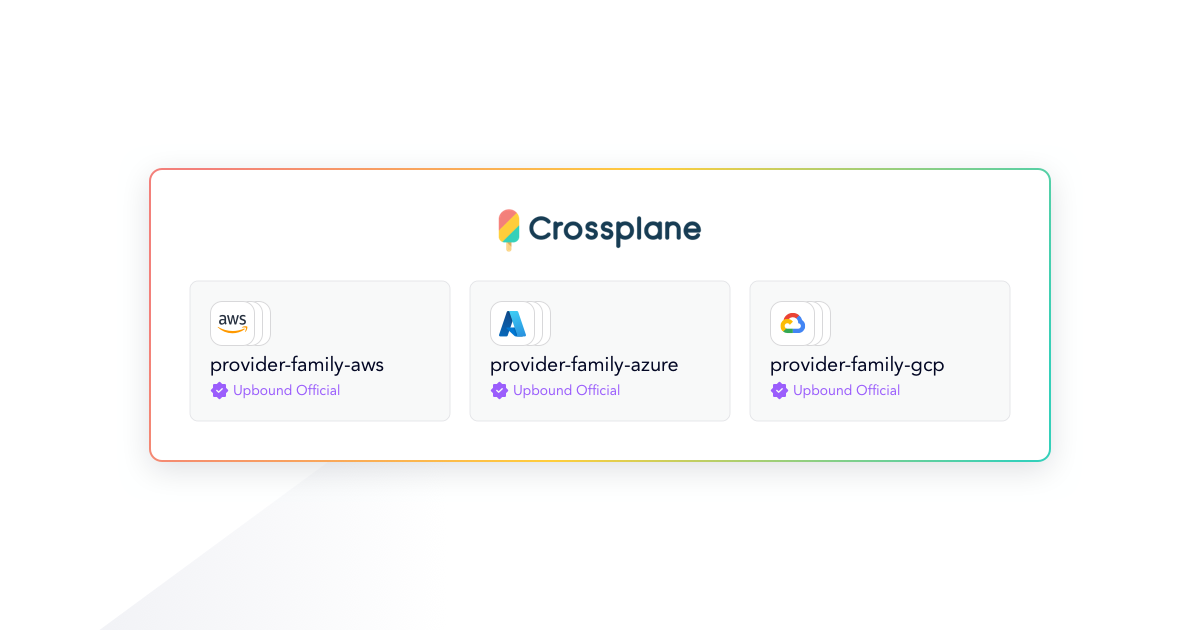
The project was donated to the Cloud Native Computing Foundation (CNCF) by Upbound, and is now being expanded to include integrations, known as providers, with specific cloud computing environments that might be used to host an instance of Crossplane.
Upbound CEO Bassam Tabbara said the goal is to eliminate the need for IT teams to build their own providers for each platform. Instead, the Crossplane community can now standardize on a common set of providers to deploy the platform.
That’s critical for platform engineering teams aiming to centralize the management of DevOps workflows across multiple IT environments, he added. In effect, control planes provide an alternative to relying on custom scripts to make changes more consistently to IT environments at scale using application programming interfaces (APIs). The single biggest thing distinguishing cloud service providers from enterprise IT organizations is the former investing in building out a control plane to streamline the management of IT at scale, noted Tabbara.
It’s not clear how quickly organizations are moving to centrally manage control planes, but it’s obvious more organizations are becoming increasingly sensitive to the total cost of IT. Each control plane employed today is managed in isolation, requiring organizations to hire IT staff to manage each type. Upbound is making a case for a centralized approach to managing infrastructure using an API familiar to organizations that run Kubernetes clusters but can also be applied to both cloud-native and monolithic application environments based on virtual machines.
There are multiple approaches to centralizing the management of IT, so each organization will need to decide what approach makes the most sense. Upbound is making a case for an open source approach to provide access to a managed instance of Crossplane that requires less expertise.
Of course, IT leaders need to have sufficient political capital to centralize the management of control planes. IT teams generally prefer the control plane they know best, so convincing leadership to transition to another will require a lot of fortitude. Far too many IT personnel still define their value by the certification they have achieved to manage specific platforms rather than the function they provide to their organization.
Ultimately, however, it’s only a matter of time before the control plane issue is forced. As organizations continue to deploy workloads across multiple clouds and on-premises IT environments that include edge computing platforms, it’s becoming less practical to use multiple control planes. Each control plane increases the total amount of IT headcount at a time when the single biggest cost of IT is the people needed to manage it.