TriggerMesh Shaker Project Fosters Event-Driven Interoperability

TriggerMesh is launching an open source Shaker project that captures, transforms and delivers events without needing developers to write a single line of code.
Deployable on any platform as a Docker container, Shaker provides a platform-neutral approach to fostering interoperability across event-driven applications.

TriggerMesh CEO Sebastien Goasguen says Shaker provides equivalent capabilities to that of a similar platform from Amazon Web Services (AWS) known as AWS EventBridge without locking IT organizations into a specific cloud platform. Shaker is based on the same AWS CloudEvent specification as AWS EventBridge, but adds a transformation engine based on a simple domain-specific language (DSL) that transforms code.
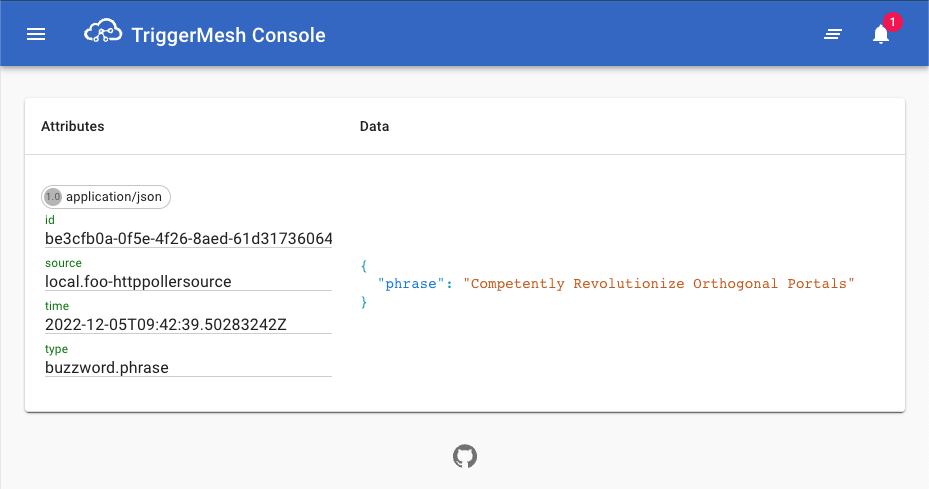
IT teams have the option of deploying Shaker either in memory to support stateless applications or using it alongside the Redis database to provide persistence, notes Goasguen.
IT organizations of all sizes are starting to build more event-driven applications because they are easier to extend due to their loosely-coupled nature. The challenge is that event-driven applications have historically been among the most challenging to build and maintain.
Shaker reduces that complexity by providing a unified way to work with events using a common command line interface (CLI), said Goasguen. Events are often heterogeneous and need to be transformed, which requires additional tools. Developers need a low-friction way to consume events that doesn’t require them to master the nuance of every platform that generates them.
Most IT environments today comprise a hodgepodge of applications and platforms that are mainly updated using batch-oriented processes. However, as it becomes necessary to update applications and platforms in near-real-time, it’s become apparent there is a need to employ an event-driven architecture. The overall goal is to make it simpler to build those types of applications at a time when organizations are rolling out various digital business transformation initiatives that require updates in near-real-time.
TriggerMesh already makes available the Kubernetes-based TriggerMesh Integration Platform under an open source license. The TriggerMesh Integration Platform is based on open source Knative middleware extended to add support for the proprietary Lambda serverless computing framework created by AWS. The platform provides access to a cloud bus to facilitate application flow orchestration and the consumption of events emanating from any data center application or cloud source. It is designed to trigger serverless functions using a declarative application programming interface (API) and a set of tools for defining event flows and functions.
At the core of that offering is an integration-as-code approach enabling event-driven workflows based on a TriggerMesh Integration Language (TIL) that makes it simpler to create and maintain integrations in Kubernetes environments without YAML files. Instead, TIL provides access to a higher-level declarative language that abstracts Kubernetes objects using the HashiCorp Configuration Language (HCL) to provision infrastructure-as-code (IaC).
At this point, it’s not so much a question of whether more event-driven applications will be built. Rather, it’s a question of how many will be built as they become simpler to create and maintain.