Docker, Inc. Sees Increased Pulls from Docker Hub

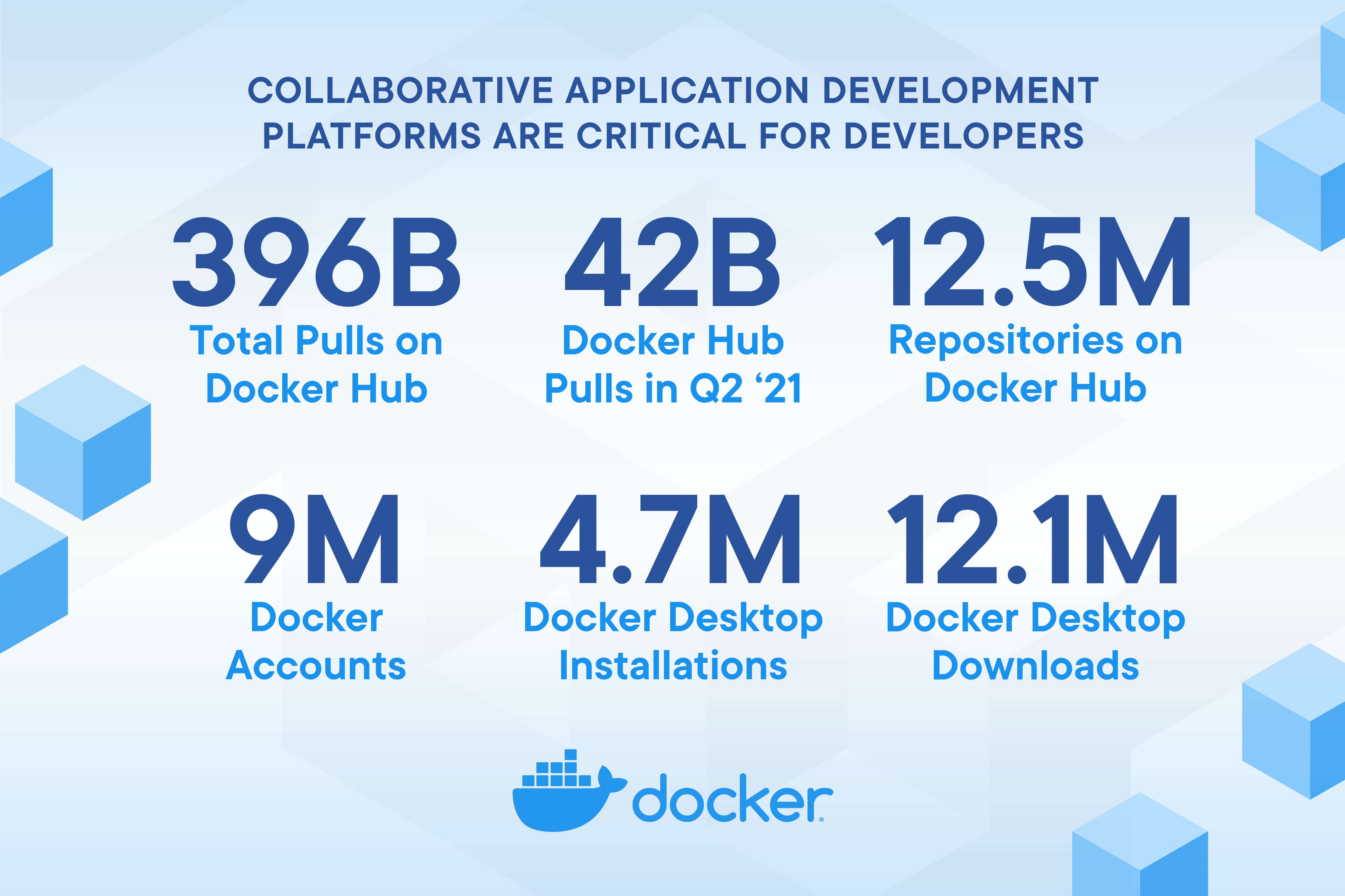
The number of pulls from Docker Hub in the second quarter increased to 42 billion in the second quarter of 2021, a 12 billion increase from the 30 billion pulls that Docker, Inc. revealed in the fourth quarter of 2020.
In total, Docker, Inc. claims the total number of pulls from Docker Hub stands at 396 billion for all time as of August 31st, 2021.

The number of application container image repositories on Docker Hub also reached 12.5 million, up from 8.3 million in February 2021. Docker, Inc. reports a more than 50% year-over-year increase in the number of application components that developers employ to build applications.
Finally, Docker, Inc. has revealed there are now nine million Docker Hub accounts, up about 30% year-over-year, and that Docker Desktop installations have risen to 4.7 million from 3.3 million in February this year. Overall, Docker Desktop downloads now stand at 11.9 million.
Matt Carter, vice president of marketing for Docker, Inc., says that level of growth is an affirmation of the trust developers are placing in Docker Hub as a secure repository for software artifacts, especially as many organizations are reviewing their software supply chain processes in the wake of a series of recent high-profile breaches.
To ensure the integrity of those supply chains, Docker Inc. has been making a case for Docker Trusted Content, including Docker Official Images, Docker Verified Publisher content and Docker-sponsored open source software, to provide developers with access to container images that are continuously maintained and inspected.
Carter notes those offerings also play a critical role in driving digital business transformation initiatives that require a secure software artifact foundation.
It’s not clear what percentage of new applications being built and deployed are based on containers. However, the current growth rate of pulls suggests that the percentage of applications being developed using containers is steadily rising to the point where many IT teams will need to finally revisit how they deploy and update applications.
The bulk of applications running in IT environments today are monolithic, which requires them to be updated using patches any time an organization wants to add new functionality or address a security issue. Containers, conversely, make it possible to rip and replace artifacts to add new functionality or remediate a vulnerability. That approach not only accelerates the rate at which applications are updated but also improves the overall security posture of the application environment.
Containers are typically embraced because they make developers’ lives easier; they simplify the deployment of software on multiple platforms. However, as IT teams are exposed to more container applications, the downstream benefits containers provide are starting to become more apparent. That may not result in large numbers of monolithic applications being replaced by more modern so-called cloud-native applications overnight. After all, microservices-based applications built using containers tend to have a lot of dependencies that are still challenging to create and manage. Nevertheless, it does mean the number of new monolithic application development projects being launched should continue to decline as IT teams finally come to appreciate that, comparatively, they’re a bigger headache to support and maintain.