Tuesday, April 14, 2026
Cloud Native Now

Cloud Native Now


MENUMENU
  • Home
  • Webinars
    • Upcoming
    • Calendar View
    • On-Demand
  • Podcasts
    • Cloud Native Now Podcast
    • Techstrong.tv Podcast
    • Techstrong.tv - Twitch
  • About
  • Sponsor
MENUMENU
  • News
    • Latest News
    • News Releases
  • Cloud-Native Development
  • Cloud-Native Platforms
  • Cloud-Native Networking
  • Cloud-Native Security
Contributed Content Kubernetes Social - Facebook Social - LinkedIn Social - X Topics 

AI-Driven Cloud Moderation in Kubernetes Clusters 

April 7, 2026April 12, 2026 Siva Kantha Rao Vanama Autonomous Infrastructure, cloud cost optimization, FinOps AI, Kubecost, Kubernetes AI, Machine Learning K8s, Platform Engineering Metrics, Platform Ops, predictive scaling, Resource Moderation
by Siva Kantha Rao Vanama

This article builds directly on “Platform Team Metrics That Actually Matter: Beyond DORA,” which highlighted key performance indicators like deployment frequency and cost efficiency for platform teams. It extends those concepts by exploring AI tools that automate cloud resource moderation in Kubernetes, helping teams achieve those metrics at scale.​ 

Techstrong Gang Youtube

The Cost Challenge in Kubernetes Platforms 

Kubernetes clusters enable dynamic scaling but often lead to unchecked cloud spend through orphaned resources, overprovisioned pods, and inefficient autoscaling. Platform engineers track metrics like mean time to recovery (MTTR) and change failure rate, yet cloud costs frequently exceed budgets by 30-50% in mature setups. 

AI addresses this by analyzing usage patterns in real time, predicting waste, and enforcing policies without human intervention. Tools integrate with Kubernetes operators to right-size resources proactively. 
Core AI Techniques for Moderation 

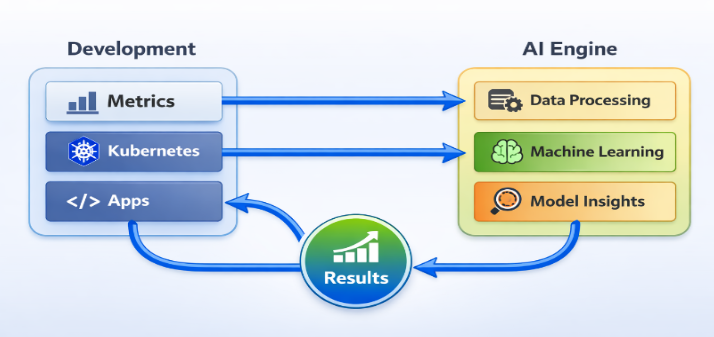
AI-driven moderation uses machine learning models trained on cluster telemetry from Prometheus or OpenTelemetry. 

  • Anomaly Detection: Models like isolation forests flag unusual spikes, such as a namespace consuming 200% expected CPU, triggering auto-scaling down.​ 
  • Predictive Scaling: Time-series forecasting (e.g., Prophet or LSTM) anticipates load based on historical data, preventing overprovisioning during off-peak hours. 
  • Resource Optimization: Reinforcement learning agents simulate pod placements to minimize costs while meeting SLAs, similar to Kubernetes’ descheduler but enhanced with AI. 

These run as custom controllers in the cluster, querying cloud APIs like AWS Cost Explorer or GCP Billing. 

Practical Implementation Steps 

Start by instrumenting your cluster for AI readiness. 

  1. Deploy observability: Use kube-state-metrics and node-exporter to feed data into a vector database like Pinecone. 
  2. Build AI pipelines: Leverage open-source frameworks such as Kubeflow for model training on cost data. 
  3. Enforce via operators: Create a Custom Resource Definition (CRD) for “AIClusterBudget” that applies policies cluster-wide. 

For example, an AI agent could detect idle nodes and evict them: 

Text 

apiVersion: ai-moderation.example.com/v1 

kind: ClusterBudget 

spec: 

  maxCost: “5000/month” 

  aiModel: “cost-forecaster-v2” 
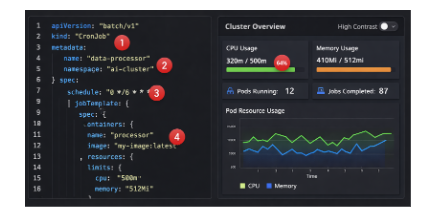
This ensures self-service compliance, aligning with platform goals of reducing toil. 

Real-World Impact on Platform Metrics 

Teams using AI moderation report 25-40% cost reductions. One enterprise cut AWS bills by $200K quarterly by automating spot instance bidding in EKS. Beyond DORA, this boosts flow efficiency developers focus on code, not tickets for resource approvals.​ 

Metrics improve: Deployment frequency rises as guardrails prevent cost-related rollbacks, and reliability grows via predictive alerts. 

Vendor-Neutral Tools and Best Practices 

Opt for open tools to stay agnostic: 

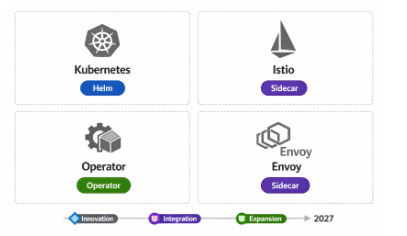
Tool  Function  Kubernetes Integration 
KubeCost  Baseline cost allocation  Helm chart, Prometheus exporter 
StormForge  AI optimization  Operator for experiments 
CAST AI  Auto-scaling  Native K8s controller 
Kubecost + MLflow  Custom models  Sidecar injection 

Best practices include starting small (one namespace), iterating via developer feedback, and treating the AI layer as a platform product with clear docs. 
 

Monitor for AI drift retrain models quarterly on fresh data to maintain accuracy. 

Future Directions 

As Kubernetes evolves with eBPF and Wasm, AI moderation will incorporate edge inference for sub-millisecond decisions. Platform teams should prioritize this to meet 2026 mandates for sustainable engineering.​ 

This approach turns cost metrics from reactive dashboards into proactive platform features, empowering engineers across the organization. 

  • Click to share on X (Opens in new window) X
  • Click to share on Facebook (Opens in new window) Facebook
  • Click to share on LinkedIn (Opens in new window) LinkedIn
  • Click to share on Reddit (Opens in new window) Reddit

Related

  • ← Docker Offload Unblocks Docker Desktop For Developers in Any Environment 
  • Survey: Few IT Teams Can Continuously Optimize Kubernetes Clusters →

Techstrong TV

Click full-screen to enable volume control
Watch latest episodes and shows

Tech Field Day Events

UPCOMING WEBINARS

  • CloudNativeNow.com
  • DevOps.com
  • SecurityBoulevard.com
No items
IaC Isn’t Enough for Database Delivery
7 May 2026
IaC Isn’t Enough for Database Delivery
Stress‑Testing AWS Infrastructure with Terraform: A Hands‑On Technical Challenge
7 May 2026
Stress‑Testing AWS Infrastructure with Terraform: A Hands‑On Technical Challenge
The Context Engine: Why Consolidation is the Natural Future of AppSec
6 May 2026
The Context Engine: Why Consolidation is the Natural Future of AppSec
From Prompt to Exploit: How LLMs Are Changing API Attacks
13 May 2026
From Prompt to Exploit: How LLMs Are Changing API Attacks
Data is the Differentiator for Exposure Management
6 May 2026
Data is the Differentiator for Exposure Management
The Context Engine: Why Consolidation is the Natural Future of AppSec
5 May 2026
The Context Engine: Why Consolidation is the Natural Future of AppSec

Podcast


Listen to all of our podcasts

Press Releases

ThreatHunter.ai Halts Hundreds of Attacks in the past 48 hours: Combating Ransomware and Nation-State Cyber Threats Head-On

ThreatHunter.ai Halts Hundreds of Attacks in the past 48 hours: Combating Ransomware and Nation-State Cyber Threats Head-On

Deloitte Partners with Memcyco to Combat ATO and Other Online Attacks with Real-Time Digital Impersonation Protection Solutions

Deloitte Partners with Memcyco to Combat ATO and Other Online Attacks with Real-Time Digital Impersonation Protection Solutions

SUBSCRIBE TO CNN NEWSLETTER

MOST READ

Netflix Found a Faster Way to Load Containers

March 17, 2026

Broadcom Extends Reach and Scope of Kubernetes Platform

March 24, 2026

Kubernetes Builds a Sandbox CRD for AI Agents

March 25, 2026

Istio Weaves ‘Future-Ready’ Service Mesh for AI 

March 27, 2026

Docker Inc. Allies with NanoCo to Deploy General-Purpose AI Agent Safely

April 1, 2026

RECENT POSTS

How AI Is Transforming Cloud-Native Identity and Access Management
Cloud-Native Development Cloud-Native Security Contributed Content Social - Facebook Social - LinkedIn Social - X Topics 

How AI Is Transforming Cloud-Native Identity and Access Management

April 10, 2026 Devin Partida 0
Pedal to Bare-Metal Kubernetes, Nutanix Forges NKP Metal 
Cloud-Native Platforms Features Kubernetes News Social - Facebook Social - LinkedIn Social - X Topics 

Pedal to Bare-Metal Kubernetes, Nutanix Forges NKP Metal 

April 8, 2026 Adrian Bridgwater 0
CleanStart Takes Aim at BusyBox to Harden Container Security
Containers Features Social - Facebook Social - LinkedIn Social - X Topics 

CleanStart Takes Aim at BusyBox to Harden Container Security

April 8, 2026 Tom Smith 0
Survey: Few IT Teams Can Continuously Optimize Kubernetes Clusters
Container/Kubernetes Management Features Kubernetes Social - Facebook Social - LinkedIn Social - X 

Survey: Few IT Teams Can Continuously Optimize Kubernetes Clusters

April 7, 2026 Mike Vizard 0
AI-Driven Cloud Moderation in Kubernetes Clusters 
Contributed Content Kubernetes Social - Facebook Social - LinkedIn Social - X Topics 

AI-Driven Cloud Moderation in Kubernetes Clusters 

April 7, 2026 Siva Kantha Rao Vanama 0
  • About
  • Media Kit
  • Sponsor Info
  • Write for Cloud Native Now
  • Copyright
  • TOS
  • Privacy Policy
Powered by Techstrong Group
Copyright © 2026 Techstrong Group, Inc. All rights reserved.
×

The State of Incident Response and Observability

Step 1 of 7

14%
Which of the following best describes your involvement with observability or incident response in your organization?(Required)
What are your biggest pain points in incident response today? (Select up to 4)(Required)
Which of the following best describes your team’s current use of AI in observability and operations?(Required)
When your team uses or has evaluated AI-assisted observability, how well does the AI include the full context of an incident—including relationships across services, infrastructure, recent changes, and team knowledge?(Required)
If an AI agent could investigate incidents and identify root cause in minutes, what would you most want it to do next?(Required)
What are the two biggest risks to your production environment today? (Select no more than 2)(Required)
What percentage of your team’s operational time is spent on reactive incident response versus proactive prevention and improvement?(Required)

×