DigitalOcean Adds Monitoring to Managed Kubernetes Service

DigitalOcean has added monitoring tools at no extra cost to a managed Kubernetes service now generally available on its public cloud.
Shiven Ramji, senior vice president of product for DigitalOcean, says the cloud service provider has spent the last several months fine-tuning its DigitalOcean Kubernetes service that provides IT organizations with access to data centers in New York, San Francisco, Amsterdam, London, Frankfurt, Bangalore and Toronto. As part of the that effort, Ramji says it became apparent that IT organizations wanted visibility into their Kubernetes clusters as a baked-in capability of the service.

In addition to average resource usage for each cluster, IT organizations can view time series graphs for the overall cluster, node pools and individual worker nodes. Specific metrics tracked include CPU usage. load average, memory usage, disk usage, disk I/O, private bandwidth and public bandwidth consumption.
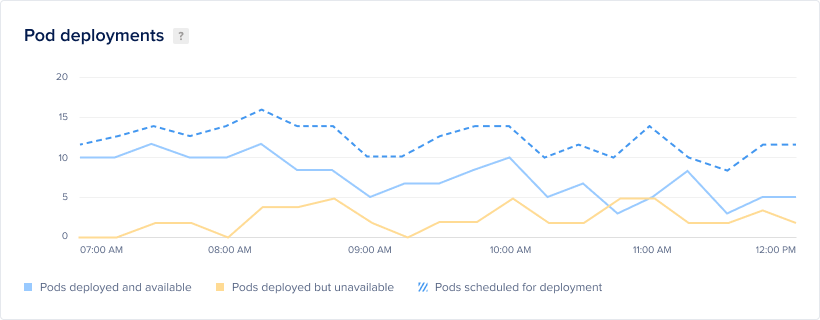
Via a kube-state metrics agent, DigitalOcean is also providing access to more advanced metrics gathered from the Kubernetes application programming interface (API) server, including pod deployment status, DaemonSet deployment status and StatefulSet pod deployment status.
Somewhere between 3,000 to 4,000 developers participated in the beta program for the managed Kubernetes service, according to DigitalOcean. Ramji notes the goal is to make it easier for the average developer to invoke a managed Kubernetes service running on DigitalOcean than on rival cloud platforms provided by Amazon Web Services (AWS), Microsoft or Google. DigitalOcean is focused primarily on serving the cloud service requirements of application developers working within startup organizations who tend to be more sensitive to and savvier about the true cost of cloud computing but may not have a lot of expertise in terms of managing Kubernetes clusters.
By making metrics available for free, Ramji says DigitalOcean also wants to make sure development teams don’t find themselves in for a nasty financial surprise at the end of any given month. Development teams of all sizes these days are concerned about costs that can swing wildly month to month unless they are closely tracked, notes Ramji.
Now that its managed Kubernetes service is generally available, DigitalOcean is considering adding support for bare-metal instances of Kubernetes, Ramji says. It also is considering launching a managed DevOps service through which it would provide development teams access to a continuous integration/continuous development (CI/CD) platform. What’s more, the cloud service provider is looking at adding access to object storage to complement the existing block-based storage service it provides, Ramji adds.
Interest in managed Kubernetes services is rising sharply simply because few IT organizations have the internal expertise require to deploy, manage and secure them. The issue many of them will need to decide is to what degree they will prefer web-scale providers of cloud services that don’t provide much in the way of hands-on support versus a smaller cloud service provider that is more focused on the end-to-end developer experience. Regardless of the path chosen, the one thing that is clear is that most IT organizations are going to need as much Kubernetes help as is possible, wherever they can find it.