Shipa Extends ALM Platform for Kubernetes

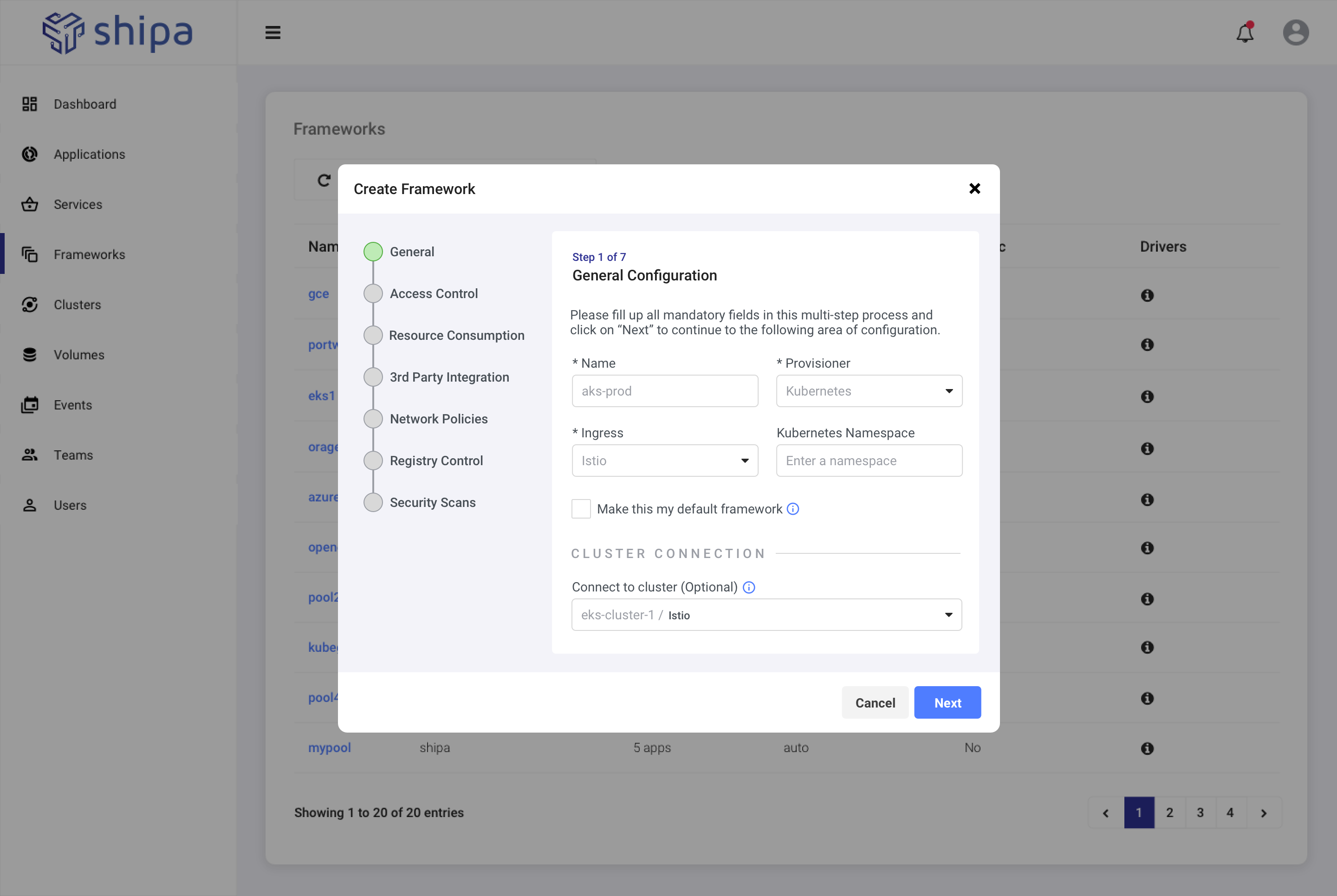
Shipa this week extended the reach of its namesake application lifecycle management (ALM) platform for Kubernetes environments. The platform now integrates with a wider range of container cloud services and container registries as well as Red Hat OpenShift, the Istio service mesh and the Vault secrets management platform from HashiCorp.
Shipa automates the deployment of microservices-based applications on Kubernetes clusters, and now also supports Amazon Kubernetes Service (AKS), Amazon Elastic Kubernetes Service (EKS), Oracle Container Engine for Kubernetes (OKE), Google Kubernetes Engine (GKE) and IBM Cloud Kubernetes Service (IKS).

Private registries such as JFrog Artifactory, Docker Hub, Amazon Elastic Container Registry (ECR), Azure Container Registry and Google Cloud Registry (GCR) are also supported.
In this latest release, 1.2, Shipa also added the ability to visualize Kubernetes network policies. Chart animation shows how network traffic moves between all graphed nodes, so users can have an exact representation of incoming or outgoing network flow. An object dependency map is also enabled for all applications.
Bruno Andrade, CEO, Shipa, says the company’s platform can be used alongside or instead of a continuous delivery (CD) platform. At its core, Shipa is an ALM platform that enables IT teams to enforce policies at the application level. Since Kubernetes’ governance model is based on individual objects, it can be challenging to visualize and manage. The application-level approach eliminates the need to create Kubernetes clusters using YAML files, develop custom scripts or rely on an opinionated platform-as-a-service (PaaS) environment to abstract away the underlying complexity of the Kubernetes environment.
In contrast, Shipa automatically creates all required Kubernetes objects and configuration files for an application, and deploys them to all clusters required. It also provides canary and rollback management capabilities. All application objects are created, deployed and monitored automatically, with an audit trail automatically generated by the platform.
Andrade says the integrations provided by Shipa will make it simpler for IT teams to construct DevOps pipelines that, by definition, need to span multiple platforms. That application environment goes well beyond the core Kubernetes cluster, Andrade says.
In general, Shipa is trying to appeal to developers who find Kubernetes environments require too much effort to manage. As the number of cloud-native applications deployed on Kubernetes increases, managing all the clusters in an extended enterprise will quickly become unsustainable, in the absence of a tool that make it simpler to operationalize Kubernetes environments, Andrade says.
In the wake of the economic downturn brought on by the COVID-19 pandemic, there’s more focus than ever on developer productivity. Organizations are embracing containers and Kubernetes, in theory, to build microservices-based applications that are more resilient than monolithic applications, and build them faster. However, if the application development and deployment experience is difficult, many organizations will continue to build monolithic applications using familiar tools and platforms, no matter how powerful Kubernetes platforms are, rather than spend additional time and effort learning new skills and methods.