Red Kubes Makes Community Edition of Kubernetes Configuration Platform Open Source

Red Kubes announced today it is making the community edition of the Otomi Container Platform available as an open source project. The Otomi Container Platform automates the deployment of a curated Kubernetes environment.
In addition, the company revealed that it received $1.45 million in seed funding from the venture capital firm Capital Mills.

Red Kubes CEO Sander Rodenhuis says the Otomi Container Platform provides IT teams with an opinionated approach to deploying a set of tools for Kubernetes clusters. The tools, considered ‘best of breed’ options by Red Kubes, are aimed at IT teams looking to automate the deployment of a complete Kubernetes environment, including DNS servers, ingress controllers and certificate provisioning.
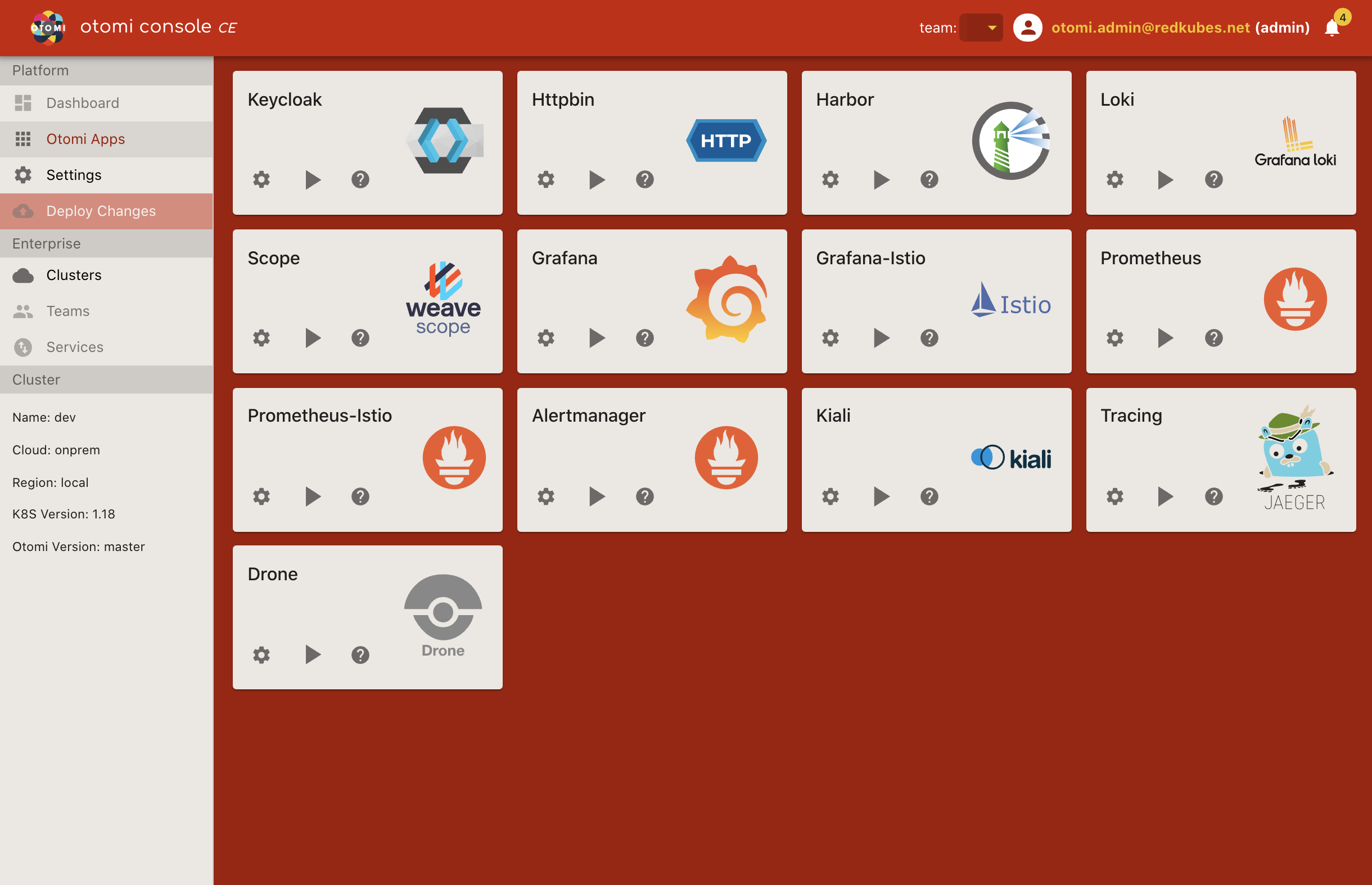
IT teams are provided with role-based access to a multitenant Otomi console through which they can access pre-configured tools and applications. The platform also provides support for single sign-on (SSO) capabilities as well as pre-configured policy management tools. The policy management tools are based on open source Open Policy Agent (OPA) standards advanced by the Cloud Native Computing Foundation (CNCF).
The Otomi Container Platform will also enable IT teams to synchronize a fleet of Kubernetes clusters around a common configuration repository.
Rodenhuis says Red Kubes will continue to offer an Enterprise Edition of its platform, with advanced self-service and delegation features, that organizations will need to license. The immediate goal, however, is to increase the number of IT teams exposed to the core platform by making it more easily accessible as open source code, Rodenhuis says.
Many IT teams struggle with the inherent complexity of configuring and provisioning Kubernetes environments. In addition to the Kubernetes cluster itself, there are a significant number of tools and applications that IT teams need to deploy to properly manage an entire Kubernetes environment. The deployment process for the myriad tools and applications is cumbersome, and, given the overall complexity of the environment, the odds of misconfiguration are high. This can open up vulnerabilities that cybercriminals might later exploit. The Otomi Container Platform aims to reduce the likelihood of human error and, therefore, improve security, by automating the deployment process.
The tradeoff, though, is that Red Kubes decides which tools and applications it will support. This means IT teams would need to build their Kubernetes environments around tools that Red Kubes deems robust enough to support. Those tools currently include open source Prometheus tools for monitoring Kubernetes clusters, the Istio service mesh, the Harbor container registry and a few others.
Whether or not IT teams standardize on this platform to automate Kubernetes environment deployments, the underlying need to simplify Kubernetes management is becoming more pressing. A recent survey published by the CNCF found a total of 81% of respondents reported using more than 20 virtual or physical machines in their container environments. Not surprisingly, 41% cited both complexity and cultural change as the top two challenges they face.
It may take time for Kubernetes environments to fully pervade the enterprise. However, it’s clear that goal won’t be achieved unless automated deployment of those environments becomes commonplace.