VMware Delivers on PaaS Promise for Kubernetes

VMware today announced general availability of VMware Tanzu Application Platform for building and deploying applications on Kubernetes clusters at a higher level of abstraction.
Ajay Patel, general manager for the modern applications and management business at VMware, says VMware Tanzu Application Platform will make Kubernetes much more accessible by providing developers with a better application development experience.

Tanzu Application Platform provides developers with a set of pre-instrumented components intended to seamlessly work together out of the box. DevOps teams, for example, can employ Supply Chain Choreographer for VMware Tanzu to create pre-approved secure paths to production that can be customized as required. There is also a VMware Tanzu Build Service that employs Cloud-Native Buildpacks to automatically create and update containers from validated building blocks.
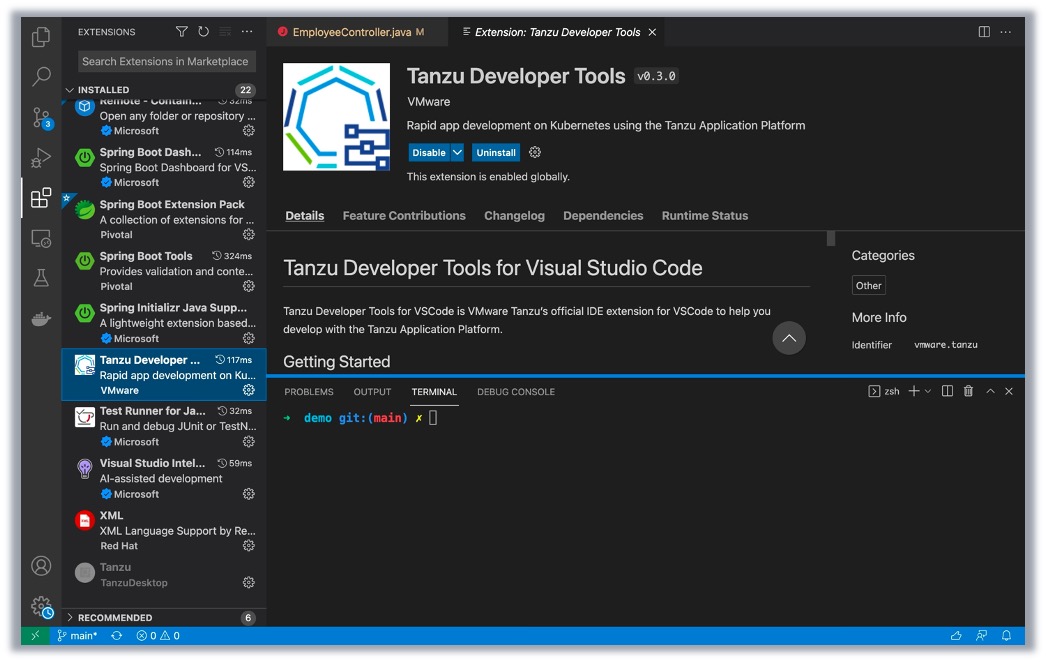
The goal is to make it easier to define automated DevOps processes where there are clear separations of concern between developers and IT operations teams, notes Patel. One of the primary reasons more developers hesitate to embrace Kubernetes is they are often presented with what is known as a “wall” of YAML files they are expected to master. Most developers generally prefer to work at higher levels of abstraction that mask the complexity of the underlying platform.
While there are other platform-as-a-service (PaaS) environments that endeavor to provide that abstraction, VMware sees an opportunity to combine the application development technologies it gained with the acquisition of Pivotal with its IT operations expertise to provide developers with a more automated experience. That PaaS environment, for example, will also make it simpler for developers that are already familiar with the Spring Boot framework for building Java applications available on Kubernetes.
From an IT operations perspective, VMware is also betting that a VMware Tanzu Application Platform that can be deployed on any Kubernetes distribution will also help drive a wave of consolidation in enterprise IT environments as IT organizations look to reduce the total cost of deploying cloud-native applications.
VMware platforms are already widely used to host monolithic applications. In most cases, IT teams will be deploying cloud-native applications based on microservices alongside those monolithic applications. VMware is making a case for relying on a single provider for the infrastructure required to host both classes of applications. Those classes of applications will be running side-by-side well through the end of the decade and into the next. In fact, VMware is positioning itself to provide the hybrid cloud computing platforms that will enable those applications to span multiple clouds, edge computing platforms and on-premises IT environments.
Regardless of what platforms are employed, there is no doubt enterprise IT environments will become more complex in the months and years ahead. As such, the need to rely more on automation to manage those environments is rapidly becoming apparent. IT team will need to determine what level of automation best suits their requirements as enterprise computing continues to evolve.